If you have ever read a mammogram report and then searched for terms like "dense breasts" or "ABUS," you are not alone. Breast screening language can become confusing quickly.
One question comes up again and again: Should I have a mammogram or ABUS?
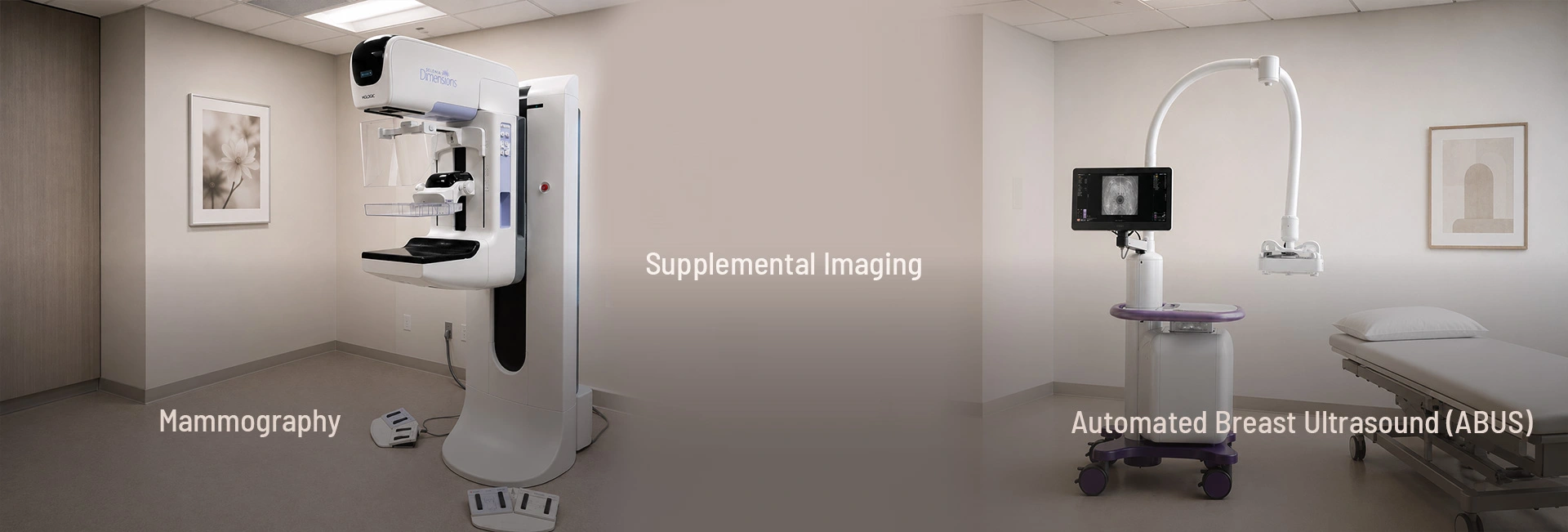
For most women, it is not an either-or decision. Mammography remains the standard breast cancer screening method. Automated Breast Ultrasound (ABUS) is supplemental imaging that may be considered for selected women, especially those with dense breast tissue. Its role is to add information, not replace the mammogram.
Mammography Still Comes First
For women at average risk, mammography is the foundation of routine breast cancer screening. It can reveal changes before they can be seen or felt and can identify findings that ultrasound does not show in the same way.
Screening recommendations are based on age and individual risk. For example, the U.S. Preventive Services Task Force recommends screening mammography every two years for women ages 40 to 74 at average risk. Your healthcare provider may recommend a different schedule depending on your personal and family history, previous findings, and overall breast cancer risk.
What Does It Mean to Have Dense Breasts?
Breast tissue contains a mix of fatty, fibrous, and glandular tissue. Breast density is assessed on a mammogram and reported as one of four categories. The two denser categories are heterogeneously dense and extremely dense.
You can't tell whether you have dense breasts by their appearance or feel. Density matters because dense tissue can make some cancers more difficult to see on a mammogram. Dense breast tissue is also associated with an increased risk of developing breast cancer.
If your mammogram reports dense breast tissue, that does not mean mammography should be skipped. Instead, it may open a conversation with your healthcare provider about whether another type of imaging could add useful information.
Where ABUS Fits Into the Conversation
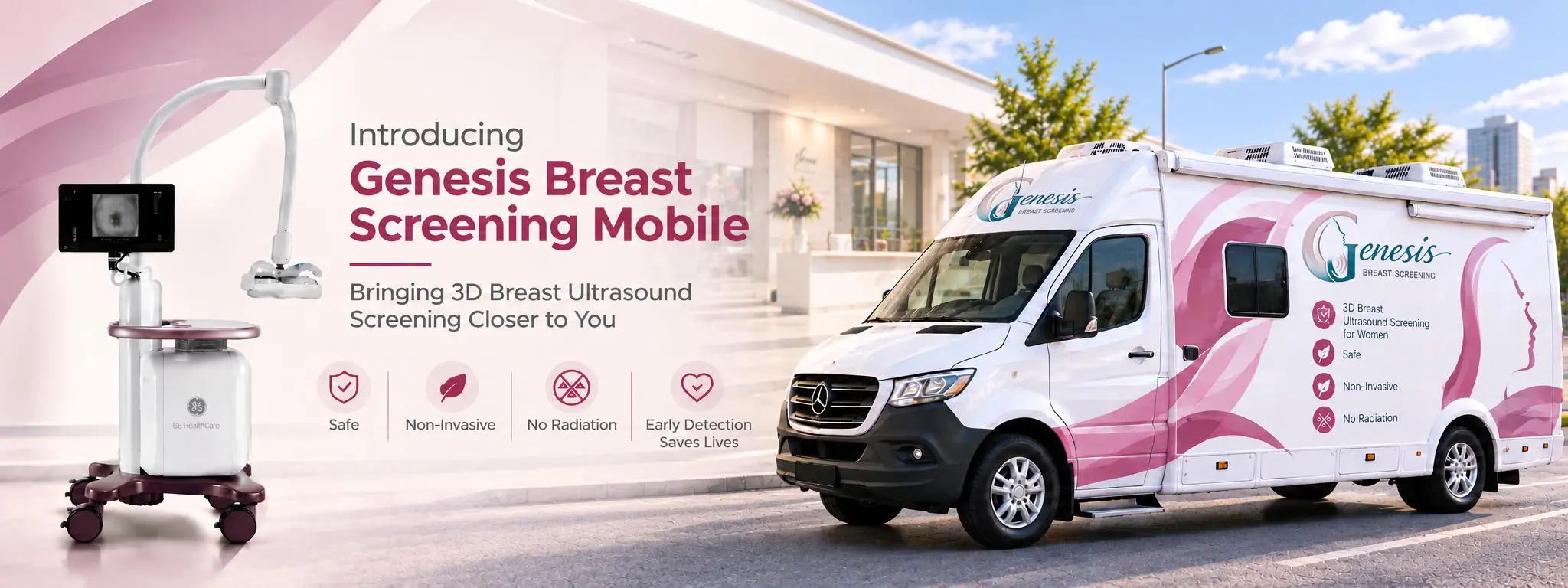
ABUS stands for Automated Breast Ultrasound. It uses sound waves to capture standardized images of breast tissue, which are then interpreted by a radiologist.
Dense breast tissue can make cancers more difficult to see on mammography. Supplemental ultrasound examines the breast using a different technology - sound waves - and may identify findings that are less conspicuous on mammography. Mammography remains essential for routine screening, and ABUS is used to add information rather than replace it.
A helpful way to think about it is not "ABUS versus mammography," but rather, "When might ABUS add useful information to mammography?"
Who May Benefit from ABUS?
So, when might that additional information be useful? One situation is after a mammogram has come back normal or benign but also shows that the breasts are heterogeneously or extremely dense. For some women in this group who do not have breast symptoms, ABUS may be considered as an additional screening tool.
Breast density is only one part of the picture. Overall risk, previous procedures, earlier imaging, and the woman's screening plan also matter.
Family history or another elevated-risk factor does not automatically make ABUS the right supplemental test. Women at higher risk should have a formal risk assessment and an individualized screening plan. For many high-risk women, MRI - usually along with mammography - may be the preferred supplemental imaging approach. Ultrasound may be considered in selected circumstances.
It is equally important to separate screening from diagnosis. ABUS is intended for supplemental screening in women who are asymptomatic. A new lump, nipple discharge, skin change, persistent focal pain, or another breast symptom needs prompt clinical assessment and may require diagnostic imaging. Screening ABUS should not be used in place of that evaluation.
What Are the Limitations of Supplemental Ultrasound?
Supplemental imaging can provide more information, but it can also lead to callbacks, testing, or biopsies for findings that ultimately prove benign.
The USPSTF currently finds that there is not enough evidence to determine the overall balance of benefits and harms of supplemental ultrasound after a negative mammogram in women with dense breasts. That does not mean supplemental ultrasound should never be used. It means the decision should be individualized and made in the context of a woman's full screening picture.
A Screening Plan Should Fit the Woman, Not the Other Way Around
There is no single screening plan that is right for everyone. If you have dense breast tissue and an otherwise normal or benign mammogram, talk with your healthcare provider about whether supplemental imaging belongs in your plan.
For more detail about candidate selection, visit our who may benefit from ABUS page.
Screening at Genesis Breast Screening
Genesis Breast Screening offers advanced ABUS technology with interpretation by board-certified radiologists experienced in breast imaging. The clinic is designed to provide a calm, private, and patient-friendly setting while keeping the focus on appropriate supplemental screening for women with dense breast tissue.
If you have dense breasts and would like to learn whether supplemental ABUS may be appropriate for you, Genesis Breast Screening can help you understand your options and schedule an ABUS screening when appropriate.
Educational note:
This information is educational and is not a substitute for personalized medical advice. Screening and diagnostic decisions should be made with a qualified healthcare professional.
References
1. U.S. Food and Drug Administration. PMA P110006S001 - Invenia ABUS. https://www.accessdata.fda.gov/scripts/cdrh/cfdocs/cfpma/pma.cfm?id=P110006S001
2. U.S. Food and Drug Administration. Understanding Breast Density. https://www.fda.gov/consumers/womens-health-topics/understanding-breast-density
3. U.S. Preventive Services Task Force. Breast Cancer: Screening. https://www.uspreventiveservicestaskforce.org/uspstf/recommendation/breast-cancer-screening
4. American College of Radiology. Appropriateness Criteria: Supplemental Breast Cancer Screening Based on Breast Density. https://acsearch.acr.org/docs/3158166/Narrative/